







Your Website Is No Longer Optional: What Digital Identity Means for Libya’s New Banking and Business Reality


A significant shift is happening in the Libyan market, and the push toward stronger digital identity is moving faster than most business owners expected.
For years, a website and a professional email were viewed as branding extras. Useful, yes — but not essential. Today, that mindset is changing. Across the banking ecosystem, businesses are increasingly being pushed toward clearer, more verifiable digital identities as part of broader regulatory requirements and platform modernization.
This change is not happening in isolation. The Central Bank of Libya has been expanding digital governance around company registration and foreign exchange access. In Sept 2025, the CBL announced the launch of a registration service for companies wishing to obtain foreign exchange.
مصرف ليبيا المركزي
At the same time, the country-wide direction toward formalized electronic services continues to accelerate. The CBL also issued instructions for a shift to electronic payments in key public sectors effective Sept 1, 2025, reinforcing the broader push toward structured, traceable financial activity.
The combined message is clear:
Business identity is becoming more formal, more digital, and more auditable.
The Market Impact: A Surge That Changed the Landscape
Regardless of how different banks operationalize the readiness requirements, the outcome in the market has been consistent:
- A sharp increase in first-time domain registrations
- An urgent wave of website launches.
- A large segment of new business owners is requesting hands-on support.
- A strong demand for “fast but compliant” delivery.
When business digital identity becomes tied to formal systems, these gaps can create friction later.
What we’re seeing at Libyan Spider
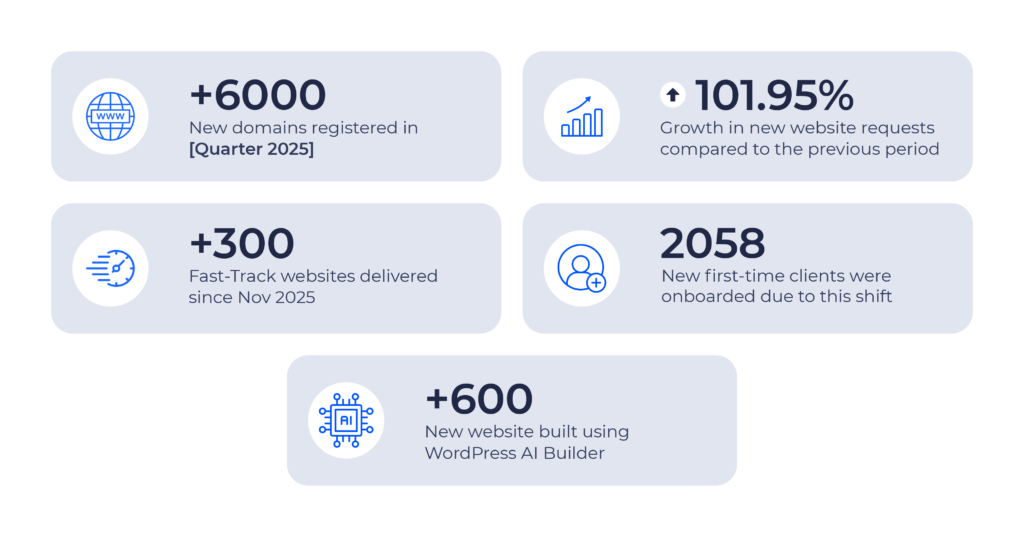
- +6000 new domains registered in [~Q4 2025]
- 101.95% growth in new website requests compared to the previous period
- +300 Fast-Track websites delivered since Nov 2025
- 2058 new first-time clients were onboarded due to this shift
- 600+ new websites delivered through our WordPress AI Builder
Why This Is Bigger Than a Website
Many business owners are entering this journey with a simple goal:
“I need a website and a domain email to complete my bank steps.”
That urgency makes sense. But the bigger reality is that this wave of requirements is part of a broader institutional change: increasing trust, traceability, and standardized identity across the business ecosystem.
A properly built website and domain email are no longer just marketing tools. They increasingly function as:
- Proof of legitimacy
- A stable public identity for a regulated environment.
- A trusted channel for official communication.
- A foundation for future services (payments, portals, e-commerce).
This transition reflects a broader movement toward structured digital identity across Libya’s business ecosystem.
The Risk of Doing It the Wrong Way
A fast market creates two realities:
- Reputable providers scale up responsibly.
- Low-quality solutions flood the space.
The danger isn’t only a “bad-looking website.” The bigger risks are:
- Domains registered under a freelancer’s name.
- No proper access handover.
- Weak security and no backup plan.
- Emails that exist but don’t reliably deliver.
- Sites hosted in unstable environments without transparent governance.
When your digital identity becomes part of formal banking and regulatory systems, these gaps turn into operational friction—causing delays, verification issues, or even loss of control over core digital assets.
Looking Ahead: What Businesses Should Prepare For Next
The current market rush is understandable. Many companies are focused on immediate readiness—getting a domain name, launching a basic website, and setting up an official email address— to move forward smoothly. But the next phase of this shift is likely to be more structured and more mature.
As the financial and regulatory ecosystem in Libya continues to evolve, the core question will gradually change. It won’t be only about whether a company has a website. Instead, the real focus will be whether that digital presence is reliable, secure, and clearly verifiable as part of the company’s official digital identity.
This is where many businesses may face unexpected friction if their setup was rushed or built without proper standards. When core identifiers like the CBL Key and IBAN become increasingly tied to formal workflows and official verification journeys, consistency across company data, domain ownership, and approved communication channels becomes more critical. An unclear website, a domain registered under the wrong name, or an email system with weak governance can quickly turn from a minor oversight into a practical risk.
Cybersecurity will also become harder to ignore. Once websites and domain email addresses are part of formal business readiness, and digital identity, the expectation naturally shifts toward greater protection. That doesn’t mean every company must implement complex enterprise security immediately. Still, it means the baseline will likely rise—covering essentials such as secure access management, clean hosting practices, backups, and protection against common attack vectors, especially as reliance on digital communication expands.
Hosting choices will likely matter more, too, particularly for regulated or high-value activities. It’s reasonable to expect greater sensitivity to infrastructure stability, service continuity, and the provider’s ability to demonstrate transparent governance and accountable support. In a more structured environment, reliability isn’t a technical luxury; it becomes part of trust.
Email is another area where many companies underestimate the future stakes. Having an address under your domain is a starting point, not the finish line. The real value comes from ensuring that email is authenticated, protected against impersonation, and managed in a way that reflects an organization’s structure—not an individual’s personal setup. As business communication becomes more formal, email trust and deliverability may become an even stronger marker of legitimacy.
Finally, many companies that launch a website today with a “basic presence” will likely upgrade quickly into more integrated digital services. The path could lead to payment readiness, service request workflows, customer portals, or e-commerce. The difference between an easy upgrade and an expensive rebuild usually comes down to the quality of the foundation built today. When a site is created only to “check a box,” future growth often becomes slower and more costly than it should be.
Why a Trusted Partner Has Become a Real Safeguard
In a high-demand moment like this, the biggest mistake isn’t paying for a website. The bigger risk is paying for a setup that won’t survive the next stage of scrutiny and growth.
A trusted provider doesn’t just deliver a fast launch. They protect your ownership, ensure your domain and systems are aligned with your company identity, and provide clear handover and long-term control. They also put the right security basics in place from day one—so your website and email are resilient rather than fragile. And importantly, they help you think beyond go-live, offering a roadmap that allows your presence to evolve smoothly into whatever the next phase requires.
Because in reality, you’re not simply buying a website anymore.
You’re building an official, verified business digital identity—one that needs to hold up today and remain credible tomorrow.
How Libyan Spider Supports This Shift
At Libyan Spider, we see this moment as a national shift in how businesses establish credibility and readiness.
As a cloud service provider and digital agency, our objective is to help businesses meet urgent needs without compromising:
- ownership
- security
- stability
- future scalability
Our approach focuses on structured delivery models that balance speed and standards, ensuring that what begins as a compliance-driven step becomes a genuine foundation for growth.
What Businesses Should Do Now
If you’re preparing for banking registration or CBL-related steps:
- Secure your domain under your company name.
- Activate the domain email with proper authentication.
- Launch a clear official website presence.
- Ensure security and backups are included.
- Keep full admin access and documentation.
Final Thought
This shift isn’t just about websites.
It’s about trust, identity, and readiness in a more structured financial environment. With the CBL expanding digital platforms and formal processes around company registration and foreign exchange access, businesses that treat this as a strategic upgrade — not just a rushed requirement — will move faster, face fewer delays, and gain long-term value.
Share:








Leave a Reply