


Behind Every Visit to Your Business Website: What Libyan Spider’s Security Data Reveals

Website security is essential to keeping your business website reliable, protecting customer information, and maintaining the digital services your customers depend on.
It usually starts with something simple: a customer visits your company’s website, searches for a service, submits a quotation request, or completes a purchase.
For the customer, what matters is that the website works as expected and their information is handled securely. For the business, however, delivering that experience depends on much more than what appears on the screen. Behind every interaction are processes that handle requests, protect data, and respond to potential security threats.
Most of these activities happen without anyone noticing, yet they play an important role in keeping the services customers rely on running smoothly.
To mark Cybersecurity Awareness Month, we’re taking a closer look at real security data from the protection solutions offered by Libyan Spider. These insights help us understand the types of threats business websites face, what security tools detect and block, and why continuous protection matters, even when everything appears to be working normally.
Millions of Website Requests: What Do the Numbers Actually Mean?
Over a 30-day period, Cloudflare recorded 375.41 million web requests across the websites included in the report, with a total of 7.7 TB of data transferred.
To put these numbers into perspective, it’s important to distinguish between web requests and individual visitors.
When someone opens a webpage, their browser may send multiple requests to load images, files, scripts, and other content. Therefore, 375 million requests do not mean that these websites received 375 million visitors, nor does the figure represent the number of cyberattacks.
While most requests are part of normal website activity, incoming traffic can also include suspicious or malicious requests. This is why inspecting and filtering traffic is an important part of website security.
What About Encrypted Connections?
The data shows that 97.50% of web requests were encrypted, representing approximately 366 million requests. Additionally, 98.55% of transferred data was delivered over encrypted connections.
Encryption helps protect information as it travels between visitors and websites, including details submitted through online forms.
However, an encrypted connection between the visitor and Cloudflare does not automatically mean the website is fully protected.
The connection between Cloudflare and the origin hosting server must also be secured, alongside other essential security measures.
What Do the Security Threat Indicators Reveal?
Beyond website traffic and encryption, security data can also provide insight into attempts to exploit vulnerabilities.
Patchstack reporting included a figure of 420.8K under its blocked-threats metric, reflecting activity that the tool classified as blocked security threats.
It is important to interpret this figure carefully.
The number does not represent compromised websites, nor can it necessarily be treated as the number of independent hacking attempts without examining the metric’s exact definition.
It also cannot be directly compared with Cloudflare’s figures, as the two tools measure different types of activity across potentially different reporting scopes.
To understand why vulnerability protection matters, consider a common business scenario.
A company may use WordPress to manage its website, relying on several plugins for contact forms, customer requests, or other functionality. If one of those plugins contains a security vulnerability, it could create an opportunity for exploitation, even while the website continues to operate normally.
This is why checking whether a website is online is not enough. Businesses also need to keep their websites updated, monitor known vulnerabilities in their components, and respond to security alerts before potential issues develop into incidents that disrupt operations.
An important note about the data: Cloudflare and Patchstack statistics should be interpreted independently because their metrics and measurement scopes differ. The number of websites covered by each report is also unavailable in the current summary. As a result, these figures cannot be used to calculate threats per website or draw conclusions about the wider Libyan market.
When Your Website Is Affected, Your Business May Be Too
For businesses, cybersecurity is not just about protecting servers and software. It also means protecting the everyday operations that depend on their websites.
A website might be responsible for receiving sales inquiries, delivering services, communicating with customers, or managing bookings.
If a security incident causes the website to become unavailable, these processes may be interrupted or delayed, affecting both the customer experience and the team’s ability to carry out its work.
Some vulnerabilities, if successfully exploited, may allow attackers to modify website content or gain unauthorized access to data. In other cases, malware can disrupt parts of a website or affect its performance.
These are potential risks, not evidence that the websites included in the reports experienced such incidents. However, they demonstrate why continuous monitoring, timely security updates, and early vulnerability management are important.
Effective website security is not limited to responding when an incident occurs. It also involves taking preventive measures that help reduce the likelihood and potential impact of security threats.
How Do Different Website Security Solutions Work Together?
Websites face different types of security risks, and no single protection mechanism addresses them all.
A solution designed to filter malicious traffic does not necessarily identify vulnerabilities in website components or detect malware within the hosting environment.
This is where solutions such as Cloudflare, Patchstack, and Monarx serve complementary roles.
- Cloudflare: Helps inspect website traffic and filter malicious requests before they reach the hosting server. Its capabilities include Web Application Firewall (WAF) protection, Distributed Denial-of-Service (DDoS) mitigation, encryption support, and content delivery optimization.
- Patchstack: Focuses on identifying known security vulnerabilities in WordPress, its plugins, and themes. It also helps reduce the risk of exploitation for supported vulnerabilities through appropriate protection rules while the underlying issues are being addressed.
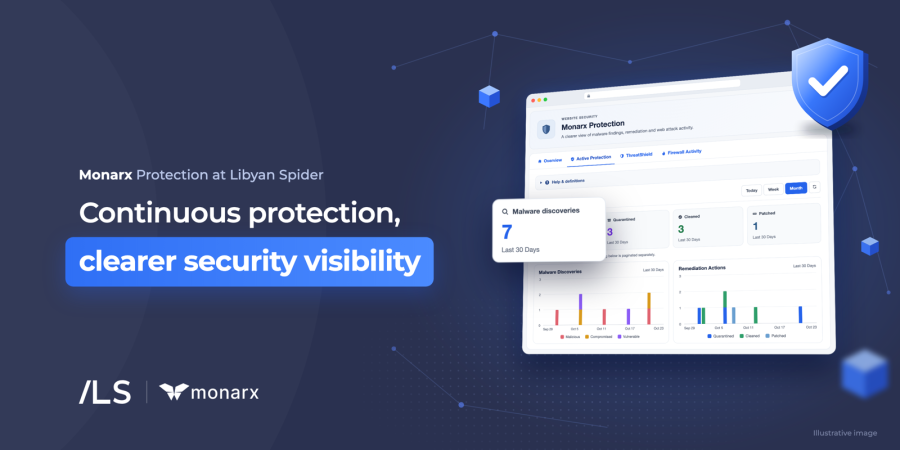
- Monarx: Helps detect malware and suspicious activity within the hosting environment, with blocking, quarantine, and remediation capabilities depending on the features enabled.
Together, these solutions address different aspects of website security.
However, the right combination depends on the website’s technology, hosting environment, and specific security requirements.
How Can Your Business Strengthen Its Website Security?
Improving website security doesn’t always require complex changes. A good starting point is to review essential security practices and establish clear responsibilities for maintaining and protecting the website.
Start by answering four questions:
1. Who Is Responsible for Website Updates?
Keep your content management system (CMS), plugins, and themes regularly updated, prioritizing security-related updates.
2. Who Monitors and Responds to Security Alerts?
Assign a person or team to review security notifications, investigate potential threats, and take appropriate action when necessary.
3. Are Your Website Administrator Accounts Properly Secured?
Use strong, unique passwords, enable multi-factor authentication (MFA), and limit user permissions to what each person needs.
4. Can You Restore Your Website If Something Goes Wrong?
Maintain backups of your website files and databases, and regularly test the recovery process to make sure your website can be restored when needed.
Website security is not simply a collection of tools you activate. It is an ongoing process built on consistent practices, clear responsibilities, and the ability to identify and manage risks.
Cybersecurity Is Part of Business Continuity
The data we’ve explored offers a glimpse into what happens behind business websites every day, from handling millions of requests and encrypting connections to identifying and blocking potential security threats.
But effective security cannot be measured by the number of blocked threats alone.
It also depends on how prepared a business is to detect problems, respond to incidents, and maintain the services its customers rely on.
This is the message we want to emphasize during Cybersecurity Awareness Month: website security should be treated as part of everyday business operations, not simply as a temporary measure taken when something goes wrong.
At Libyan Spider, we offer website security solutions that help businesses address different types of cyber threats, based on their website requirements and hosting environments.
If you need guidance on protecting your website, contact the Libyan Spider team for a consultation to help you choose the security solution that best fits your business needs.
Share:






Leave a Reply