








Accessibility: Building a More Inclusive Digital Future

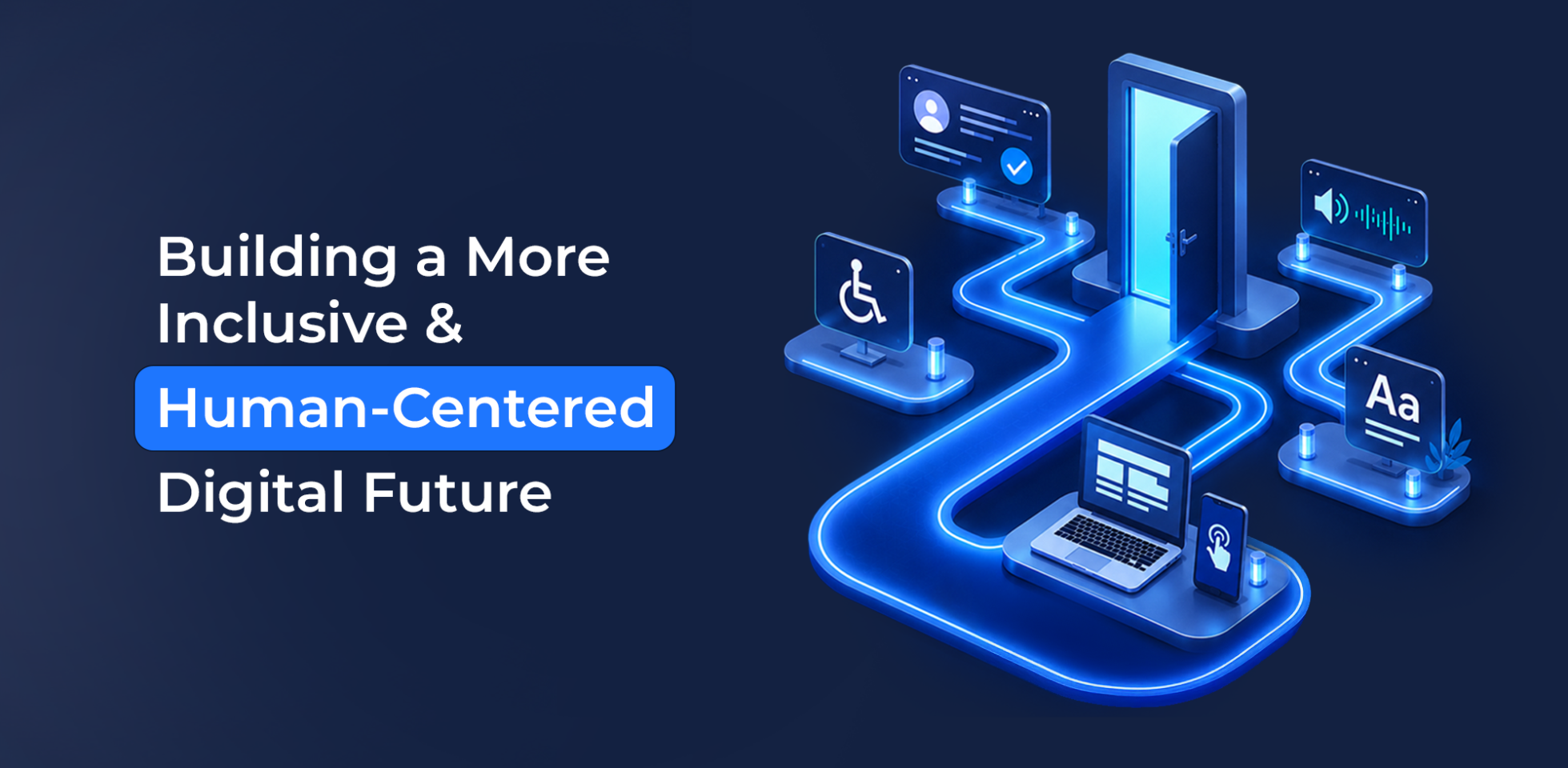
Every day, millions of people wake up and rely on technology to navigate the world around them. They use mobile apps to pay bills, websites to access healthcare, online platforms to learn, and digital services to communicate, work, and participate in society. For many, these interactions are seamless and invisible. But for others, a poorly designed website, an unreadable form, or a missing caption can become a barrier that quietly excludes them from opportunities many of us take for granted.
This is why Global Accessibility Awareness Day (GAAD) matters.
Observed annually on the third Thursday of May, GAAD was created to encourage people everywhere to think, talk, and learn about digital accessibility and inclusion. At its heart is a simple but powerful idea: the digital world should work for everyone.
And that mission has never been more urgent.
Today, more than one billion people around the world live with disabilities. Many face digital barriers every day — barriers that often have nothing to do with their abilities, but everything to do with how technology is designed. Accessibility is not only about compliance or technical standards; it is about dignity, independence, participation, and equal opportunity.
As our lives become increasingly digital, the responsibility for building inclusive experiences falls to all of us.
For Libya, a country moving steadily toward greater digital transformation, this conversation is especially important. The future we build online today will shape who can fully participate in society tomorrow.
A Digital World Growing Faster Than Ever
Over the last decade, digital services have transformed nearly every aspect of daily life. Government services are moving online. Educational platforms are becoming essential for students and teachers. Banking, healthcare, employment applications, and public information increasingly depend on digital access.
The internet is no longer a convenience, it is infrastructure for modern life.
In Libya, this transformation is accelerating rapidly. Recent digital reports indicate that internet penetration in Libya reached approximately 88.5% in 2025, representing more than 6.5 million internet users. Social media usage now exceeds 86% of the population, reflecting a society that is more connected than ever before.
This growth represents tremendous opportunity.
It means a student in a remote area can access educational resources. A citizen can communicate with public institutions more efficiently. A small business can reach customers nationwide. Healthcare information can become more accessible to families and communities.
But digital growth alone does not guarantee inclusion.
Globally, studies continue to show that nearly 95% of website homepages still contain accessibility barriers. These obstacles may seem small to some users struggle low color contrast, inaccessible forms, poor navigation structures, or videos without captions — but for others, they can completely prevent access to information and services.
In Libya, the challenge is even more important because the country is still shaping much of its digital future. Uneven digital infrastructure, limited awareness about accessibility standards, and gaps in some online public services reveal an important truth: inclusion cannot be added later as an afterthought.
It must be built from the beginning.
As Libya’s digital ecosystem continues to evolve, accessibility offers an opportunity to create a stronger, fairer, and more connected society, one where no one is left behind because of how technology is designed.
Technology Should Be a Bridge, Not a Barrier
At its best, technology empowers people.
It gives independence to someone who cannot travel easily. It allows a visually impaired user to navigate a website using a screen reader. It helps an elderly parent communicate with family through accessible mobile interfaces. It enables someone recovering from an injury to continue working remotely using voice commands instead of a keyboard.
Accessibility is not about designing for “others.” It is about recognizing the diversity of human experience.
Something as simple as clear navigation can help a first-time internet user feel confident online. Readable typography and proper color contrast can reduce strain for millions of people. Keyboard-friendly navigation can help users who cannot operate a mouse. Captions and transcripts allow videos to reach people who are deaf or hard of hearing — while also helping users in noisy environments or with limited bandwidth.
Even alt text for images can transform an inaccessible experience into one that is informative and meaningful.
Inclusive design benefits everyone.
A commuter holding a phone with one hand. A user with slow internet connectivity. Someone accessing a service in bright sunlight. A parent multitasking between work and family responsibilities. Accessibility often improves usability for all users, not only people with permanent disabilities.
And perhaps most importantly, accessibility creates confidence.
When digital experiences are inclusive, people feel seen, respected, and capable. They feel that the digital world belongs to them too.
How Artificial Intelligence Is Expanding Accessibility
Artificial Intelligence is opening a new chapter in the future of accessibility.
For years, accessibility efforts often depended on manual testing and reactive improvements after barriers were discovered. Today, AI is helping organizations create smarter, more adaptive, and more inclusive digital experiences from the start.
AI-powered screen readers are becoming more natural and context-aware. Automatic image-description systems can generate meaningful alt text for visually impaired users. Real-time speech-to-text captioning is making online meetings, educational content, and public communication more accessible than ever before.
Voice navigation and virtual assistants are helping users interact with technology in ways that feel intuitive and human. AI translation tools and language simplification technologies are making information easier to understand across different languages and literacy levels.
Even accessibility testing itself is evolving. Smart AI-driven tools can now identify accessibility barriers during development, helping teams detect issues early and improve digital experiences faster.
Perhaps the most exciting possibility is personalization.
AI can help digital platforms automatically adapt to individual accessibility needs — adjusting layouts, simplifying interfaces, enhancing readability, or supporting alternative interaction methods based on the user’s preferences.
But AI alone is not the solution.
Technology should never replace human-centered design thinking. Accessibility requires empathy, understanding, and intentional decision-making. AI is most powerful when it supports inclusive design rather than attempting to substitute it.
For Libya’s growing digital ecosystem, this presents an extraordinary opportunity.
As new public services, educational platforms, fintech systems, and digital infrastructure continue to emerge, accessibility and AI can work together to help build smarter and more inclusive experiences from the very beginning — not years later after exclusion has already occurred.
Designing the Future With Inclusion in Mind
Accessibility should never be treated as a final checkbox added shortly before a project launches.
It should be part of the foundation.
When inclusion becomes part of the design process from the beginning, digital experiences become stronger, more sustainable, and more meaningful for everyone. Developers begin asking different questions. Designers think more carefully about usability. Organizations begin to recognize that accessibility is connected to trust, participation, and equality.
Inclusive technology strengthens communities by enabling more people to participate fully in modern life.
An accessible government platform can help citizens independently access critical services. Inclusive educational systems can expand learning opportunities for students with diverse needs. Accessible digital banking can empower more people financially. Public information that is readable and usable by everyone creates a more informed and connected society.
This is especially important in countries experiencing rapid digital transformation.
Libya has an opportunity not only to modernize its digital infrastructure, but to shape it responsibly. The choices made today by organizations, institutions, developers, and decision-makers will determine whether future digital services are inclusive by design, or whether barriers become embedded into the systems people depend on every day.
Technology companies carry a significant responsibility in this journey.
Building digital products is no longer only about speed, innovation, or visual appeal. It is about understanding the human impact of every design choice. A truly modern digital future is one where innovation and inclusion move hand in hand.
Because progress means very little if parts of society are excluded from participating in it.
Libyan Spider’s Commitment to Inclusive Experiences
At Libyan Spider, accessibility is viewed as an essential part of responsible digital transformation.
As a technology company working across cloud services, web platforms, and digital solutions, we believe technology should serve all members of society equally. Inclusive experiences are not separate from innovation — they are part of what meaningful innovation looks like.
Accessibility considerations are integrated into the development of websites and digital platforms to help ensure users can interact with services clearly, comfortably, and confidently. From navigation structures and responsive design to usability and accessibility-conscious development practices, the goal is always to create experiences that are more inclusive and future-ready.
This commitment is especially important as Libya’s digital ecosystem continues to grow.
Public-service platforms, service-sector websites, educational systems, and online business services all play important roles in people’s daily lives. By supporting accessible digital experiences, organizations can help reduce barriers, improve communication, and create more equal access to opportunities and information.
Modern technologies — including AI-driven tools and intelligent digital solutions — also carry enormous potential when used responsibly. At Libyan Spider, we believe innovation should always be guided by human impact and social responsibility.
Building a more inclusive digital future requires collaboration, awareness, and long-term commitment. It requires organizations to think beyond technology itself and focus on the people technology is meant to serve.
A Future That Includes Everyone
Accessibility is not optional.
It is not a trend, a feature, or a marketing statement. It is a reflection of how we value people.
Every accessible website, every readable interface, every captioned video, and every thoughtfully designed digital experience has the power to positively impact someone’s life in ways we may never fully see.
Technology can open doors. It can connect communities. It can create opportunity where barriers once existed.
But only if we build it that way.
On this Global Accessibility Awareness Day, we are reminded that inclusion begins with awareness — and awareness must lead to action. The future of technology in Libya and around the world should be designed for everyone, regardless of ability, circumstance, or background.
Because a truly connected world is not measured only by how many people are online.
It is measured by how many people can fully participate upon arrival.
Share:











Leave a Reply